







Archive: People and Markets
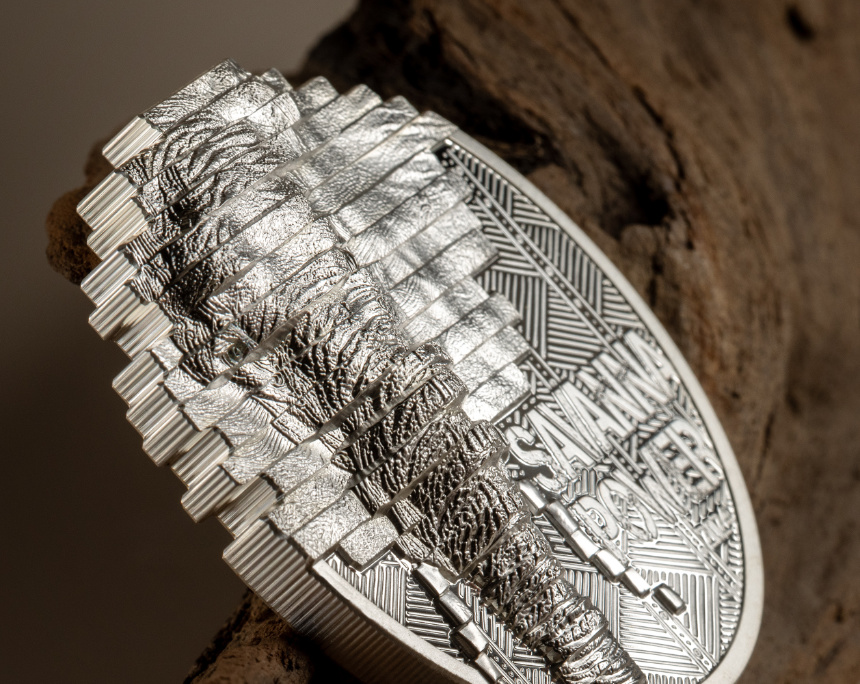
New CIT Issue: Reconstruction – Elephant
With the Reconstruction series, CIT presents a new type of coin design, showcasing once again the ingenious way in which B. H. Mayer’s Kunstprägeanstalt transforms the demanding designs of the Liechtenstein innovators into minted objects.
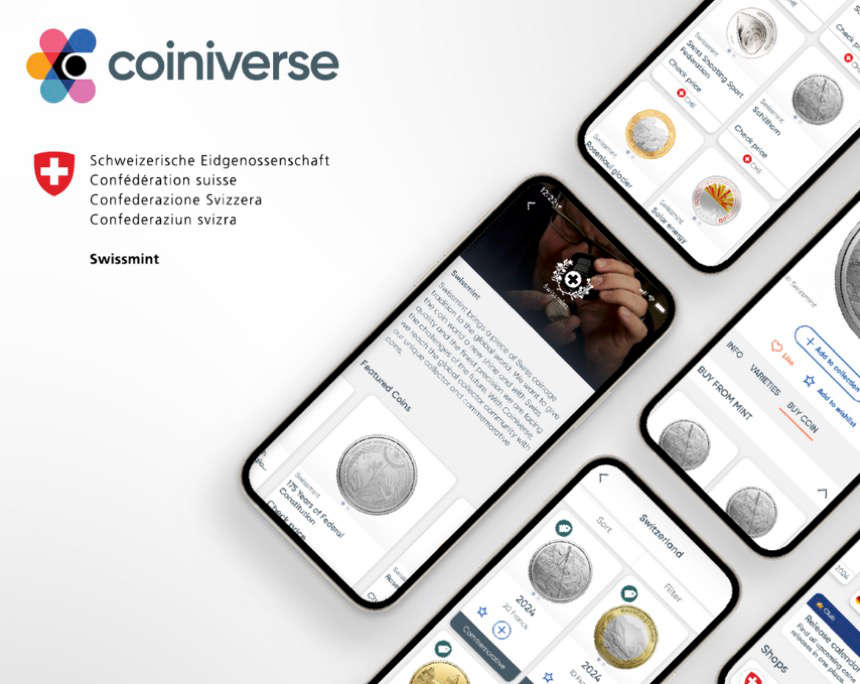
Swissmint Becomes First eCommerce Partner on Coiniverse
The numismatic smartphone application, founded by the mint of Finland and turned into an independent start-up, aims to become a marketplace for mints and coin dealers around the world.
Archive: Coins, Medals and more
 https://new.coinsweekly.com/wp-content/uploads/2025/04/2025KW16HA03_00.jpg
684
860
Lucie Loechel
https://new.coinsweekly.com/wp-content/uploads/2023/01/logo-coinsweekly_590x204.png
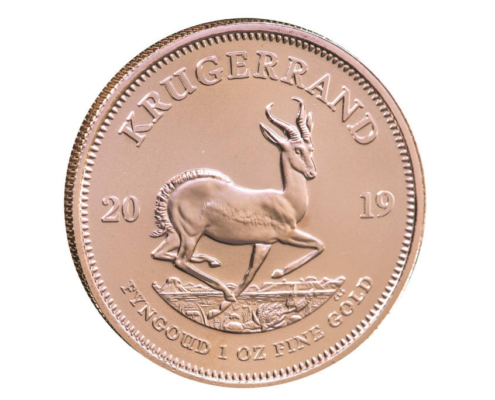
Lucie Loechel2025-04-17 08:26:292025-04-17 11:49:37The Birth of the Krugerrand
https://new.coinsweekly.com/wp-content/uploads/2025/04/2025KW16HA03_00.jpg
684
860
Lucie Loechel
https://new.coinsweekly.com/wp-content/uploads/2023/01/logo-coinsweekly_590x204.png
Lucie Loechel2025-04-17 08:26:292025-04-17 11:49:37The Birth of the Krugerrand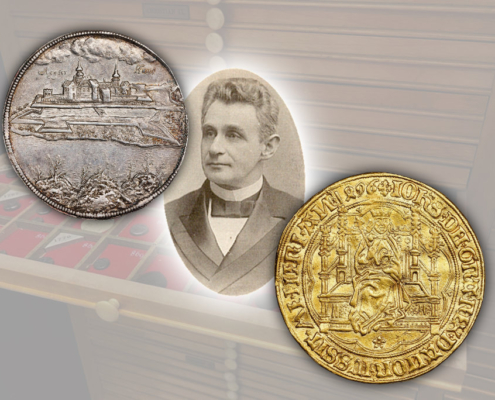 https://new.coinsweekly.com/wp-content/uploads/2024/07/2024KW27HA_00.jpg
684
860
Ursula Kampmann
https://new.coinsweekly.com/wp-content/uploads/2023/01/logo-coinsweekly_590x204.png
Ursula Kampmann2024-07-04 10:28:022024-07-04 15:03:20Highlights from the Bruun Collection
https://new.coinsweekly.com/wp-content/uploads/2024/07/2024KW27HA_00.jpg
684
860
Ursula Kampmann
https://new.coinsweekly.com/wp-content/uploads/2023/01/logo-coinsweekly_590x204.png
Ursula Kampmann2024-07-04 10:28:022024-07-04 15:03:20Highlights from the Bruun Collection
NGC Promotes Ben Wengel to Senior Vice President of World Coin Grading
NGC promoted Ben Wengel to Senior Vice President of World Coin Grading. The expert for coin counterfeit detection has worked for NGC since his time as a university student.
Coins and Mints in Avignon Between Provence and Papacy
The French Society for Numismatic and Archaeological Studies (SÉNA) published the proceedings of their 2017 colloquium. The volume presents various works and studies on the coinage in and around Avignon.