Parade of the “Lange Kerls” (Long Guys)
They were his special hobby, the “Lange Kerls” (Long Guys), Frederick William I of Prussia tested his military innovations on. He even had a medal dedicated to them.
Anyone looking up the St. Lambert’s Church in Münster discovers above the church clock a kind of decoration that is more than peculiar. High above, for everyone to see, there are three iron cages suspended from the steeple. Their background story will be told today.
On 21 March 2018 auction house Künker will auction off the Dr. Michael and Dr. Adelheid Loos collection of coins and medals from Mainz. This presents a great opportunity to tell the story of the city in medieval times based on the coins.
On 7 October, 2014, Künker auctions off the Horn Collection. It contains cimelia not just of the European but the German coinage as well. We would like to introduce you to a spectacular piece – the thick triple reichsthaler of Archbishop Anselm Casimir Wamboldt von Umstadt, nicknamed German Cicero.
Recte et constanter – uprightly and firmly, this is the motto under which empress Wilhelmine Amalia had taken up the reign. And uprightly and firmly did she act after her husband’s death as well. That is what is presented on an impressive medal offered at Künker.
Frederick August I, August the Strong, as he loved to call himself, was highly gifted and ambitious. “Little” Saxony was not enough for him, he wanted to join the game of international politics. A splendid opportunity occurred in 1696 when the Polish King had died…
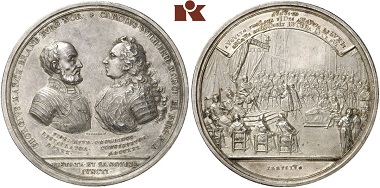
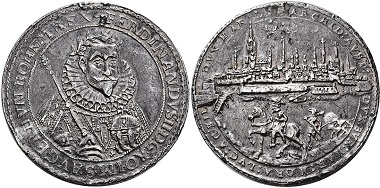
In 1701, the Treaty of Hamburg ended the dispute over Mecklenburg-Güstrow between Friedrich Wilhelm I and Adolf Friedrich II. And another dispute culminated in the medals minted to mark the treaty, namely the one between the mint-master and the warden of the Schwerin mint. We are telling you the story.
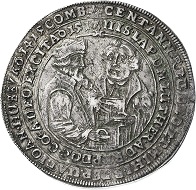
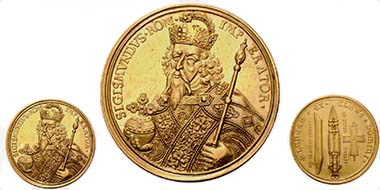
Around 1600, coin collecting was “the” leisure activity of the intellectual elite. The emperor himself was an avid collector. He was imitated by many noblemen among them Philip II of Pomerania, who put together a great art collection in cooperation with Philipp Hainhofer.
In early Modern times the Hesse noble house of Solms faced like many other nobles financial problems. The imperial service and own coin issues were their way of solving that issue. Even though some members of the family had not been granted the minting privilege at all …
Napoleon was a master in the art of humiliation. Please find here a characteristic example of his mastership: The French Victoria is taming the Saxon Steed on a medal made from Saxon silver.
We are the bridge connecting the international numismatic world. Our readers include collectors, professional coin dealers and researchers, as well as all those involved in coin production. We are read in 170 countries! We provide you with information on everything you want to know about the subject of money – from antiquity to the present day. And much more...
Follow us
You need to load content from reCAPTCHA to submit the form. Please note that doing so will share data with third-party providers.
More InformationYou are currently viewing a placeholder content from Facebook. To access the actual content, click the button below. Please note that doing so will share data with third-party providers.
More InformationYou are currently viewing a placeholder content from Instagram. To access the actual content, click the button below. Please note that doing so will share data with third-party providers.
More InformationYou are currently viewing a placeholder content from X. To access the actual content, click the button below. Please note that doing so will share data with third-party providers.
More Information